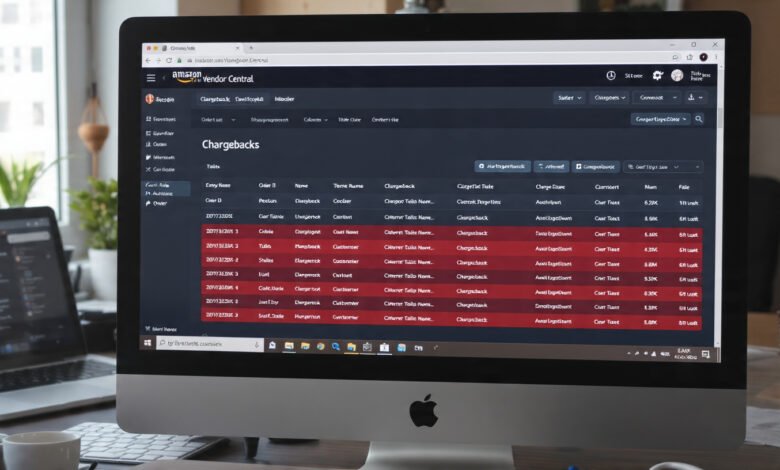
Amazon Vendor Central chargebacks are one of the most expensive problems a first-party vendor can face, and the frustrating part is that most of them are entirely avoidable. These are not random fees. They are automated penalties Amazon fires at you the moment your operations drift even slightly outside their compliance requirements. Miss a delivery window. Submit an ASN late. Send a shipment with the wrong label. Amazon deducts the money before you even realize what happened.
For brands generating significant revenue through Vendor Central, the cumulative hit from chargebacks can be startling. Industry data suggests vendor chargebacks typically consume between 1% and 5% of invoice value annually, with that figure jumping to around 4% during Q4 alone. On a $2 million account, that is potentially $80,000 walking out the door every year because of packaging mistakes, late pickups, and missing ASN data.
What makes this worse is the psychology around it. Many vendors treat chargebacks as a fixed cost of doing business with Amazon. They are not. A large portion of recurring chargebacks is preventable with the right internal processes, and a meaningful slice of the ones that do hit are disputable — if you act fast enough. This article breaks down how Amazon Vendor Central chargebacks work, where operational non-compliance starts eating your margins, and what you can actually do to stop the bleeding.
What Are Amazon Vendor Central Chargebacks?
Amazon Vendor Central chargebacks are financial penalties deducted directly from vendor payments when a supplier fails to meet Amazon’s operational and supply chain compliance standards. They are not invoiced separately. Amazon takes them off the top, which is exactly why so many vendors miss them until the damage is already done.
The chargeback system exists because Amazon operates at a scale where even minor process inefficiencies create meaningful costs on their side. If your shipment arrives without a proper Advance Shipment Notification (ASN), Amazon’s fulfillment center staff cannot pre-plan receiving. If your cartons are incorrectly labeled, workers spend extra time resolving discrepancies. Amazon’s position is simple: if you create the problem, you absorb the cost.
There are important distinctions worth understanding here:
- Chargebacks are compliance fines tied to operational process violations
- Shortage claims are deductions for inventory Amazon says it did not receive in full
- Co-op deductions are agreed marketing fees, sometimes applied outside agreed terms
- Price claims occur when invoice pricing does not match purchase order terms
This article focuses specifically on operational chargebacks — the ones triggered by how you ship, label, package, and communicate with Amazon’s supply chain.

The 7 Most Costly Amazon Vendor Central Chargeback Types
1. PO On-Time In-Full (OTIF) Non-Compliance
PO On-Time In-Full violations are among the highest-value chargebacks vendors face. Amazon assigns every purchase order a specific ship window and expected delivery date. If your shipment arrives outside that window — even by a day — or if you ship fewer units than confirmed, you get hit with an OTIF chargeback.
For collect shipments, the trigger is a freight-ready date submitted after the PO ship window closes. For prepaid shipments, it is a carrier delivery date outside the delivery window. Both carry serious financial consequences, and the fee structure scales with how often you miss.
Why this happens:
- Poor coordination between inventory management and order fulfillment teams
- Warehouse capacity issues during high-demand periods
- Carrier scheduling failures or booking delays
- Inaccurate lead time assumptions at the time of PO confirmation
The fix: Build a buffer into your freight-ready dates. Do not confirm PO quantities you cannot actually fulfill within the window. Treat the ship window as a hard deadline, not a target.
2. ASN Accuracy and Timeliness Chargebacks
Advance Shipment Notification accuracy is consistently one of the top chargeback categories on Vendor Central. An ASN is the electronic notification you send to Amazon before your shipment arrives at their fulfillment center. It tells them what is coming, in what quantities, on which pallets, and when.
When the ASN is missing, late, or contains incorrect data, Amazon cannot pre-plan the receiving process. The chargeback fee structure for ASN compliance violations is tiered:
- Above 95% compliance rate: 2% of product cost
- Between 70–95% compliance rate: 4% of product cost
- Below 70% compliance rate: 6% of product cost
On a $50,000 purchase order, a mid-range compliance failure costs you $2,000 in a single shipment. Common ASN errors include:
- Missing or incorrect Amazon Reference Numbers (ARN) for LTL or TL shipments
- PRO/BOL mismatches for prepaid shipments
- Missing expiration dates on consumable products
- Unit count discrepancies between the ASN and what physically arrives
- Late ASN submission after the shipment has already been picked up
The fix: Automate ASN generation directly from your Warehouse Management System. Manual entry is where errors live. Implement a pre-shipment checklist that includes ASN verification before any truck leaves your dock.
3. Carton Content Accuracy Violations
Carton content accuracy measures whether what you say is in a carton actually matches what Amazon finds when they scan and receive it. This is separate from ASN accuracy — ASN accuracy measures the overall shipment level, while carton content accuracy measures what is physically in each box.
Mixed cartons (multiple SKUs in a single carton that are not supposed to be mixed), unit shortages at the carton level, and incorrect item weights or dimensions flagged during receiving all generate chargebacks under this category.
For vendors shipping hundreds of SKUs, carton accuracy issues often trace back to one of two root causes: inadequate warehouse pick-and-pack verification, or rushed outbound processing during peak periods. Either way, Amazon does not care about your internal pressures — the penalty sticks regardless.
4. Prep Non-Compliance Chargebacks
Amazon has specific packaging compliance and preparation requirements for virtually every product category. Items that need bubble wrap must arrive bubble-wrapped. Products that require poly-bagging must be bagged. Fragile items need sufficient dunnage. Overweight or oversized cartons that violate weight limits generate receiving chargebacks immediately.
Prep non-compliance chargebacks are particularly common for vendors who:
- Have recently added new SKUs without reviewing category-specific prep guidelines
- Use third-party logistics providers who are not fully briefed on Amazon’s requirements
- Operate with packaging standards designed for retail distribution that do not map to Amazon’s fulfillment center requirements
The fix here is documentation and training. Every person touching outbound inventory headed to Amazon should have a product-by-product prep guide. If you are using a 3PL, that guide needs to be contractually enforced, not just shared.
5. Routing and Pickup Accuracy Failures
When Amazon books freight on a collect shipment, they use your declared freight-ready date to schedule carrier pickup, allocate transportation capacity, and reserve dock labor at the fulfillment center. If a carrier arrives at your location and cannot be loaded because you are not ready, that is a pickup accuracy defect — and a chargeback follows.
Amazon specifically defines a defect as: a vendor that reschedules a collect TL or LTL shipment after 5:00 PM PST the day before scheduled pickup, or a carrier arriving on GPS-confirmed schedule only to find the shipment is not ready.
This chargeback is often the hardest to dispute because Amazon has GPS data from the carrier. If their records show the truck arrived and left empty, your denial claim needs to be very strong to succeed.
6. PO Confirmation Errors
PO confirmation compliance covers how quickly and accurately you respond to purchase orders in Vendor Central. Amazon expects vendors to confirm or reject POs within a specific window. Failing to confirm POs on time, confirming and then backing out, or over-confirming units you cannot supply all create compliance problems.
Key sub-types under PO-related chargebacks:
- Unconfirmed PO units: Items shipped that were never formally confirmed
- Overage PO units: More units received by Amazon than were on the PO
- High PO rejection rate: Chronic backorders or refusals signal a supply chain reliability problem
- Paper invoice submissions: Using unapproved invoicing methods instead of Amazon’s electronic system
That last one is easy to avoid but surprisingly common. Amazon requires electronic invoicing. Submitting paper invoices outside the approved process generates an automatic penalty regardless of whether the invoice itself is accurate.
7. Import Compliance Chargebacks
For vendors shipping internationally to Amazon’s fulfillment network, import-related vendor compliance violations carry some of the steepest fees in the entire chargeback system.
Since 2023, Amazon centralized all import shipment tracking through Carrier Central and VendorFlow. Booking through email — a legacy practice many international vendors still use — is no longer accepted. Specific charges include:
- Import PO On-Time Non-Compliance or Late Booking: 3% of product cost
- Late Document Delivery: $150 per document if late by 1–3 days, plus $50 per additional day
These fees add up very fast for high-volume import operations, particularly if document submission processes are not tightly controlled.
How Amazon Vendor Central Chargebacks Damage Your Business Beyond the Fee
The direct financial hit is obvious. But the downstream effects of chronic operational non-compliance on Vendor Central are broader than most vendors appreciate.
Account Health and Purchase Order Frequency
Amazon tracks vendor compliance metrics internally. Persistent chargeback patterns affect how Amazon’s automated systems view your account’s reliability. This can translate into reduced purchase order frequency, lower confirmed unit quantities, or — in more extreme cases — restrictions on new ASIN onboarding. Amazon is not going to call you and explain why your POs have gotten smaller. You will just notice the pattern.
Cash Flow Disruption
Because chargebacks are deducted automatically from payments, they disrupt your receivables without warning. Finance teams reconciling vendor payments frequently discover unexplained deductions weeks after they were applied. By the time the issue is identified, the 30-day dispute window may have already closed on some of them.
The Operational Feedback Problem
Here is a counterintuitive way to look at chargebacks: they are actually telling you exactly where your supply chain is broken. Each chargeback code is a diagnostic signal. An OTIF chargeback is a warehouse throughput problem. An ASN accuracy chargeback is a data entry or systems problem. A prep compliance chargeback is a training or 3PL accountability problem. Vendors who treat chargebacks purely as penalties miss the operational intelligence they contain.
How to Monitor Amazon Vendor Central Chargebacks
Every vendor should be in the Operational Performance dashboard in Vendor Central at least weekly. The path is: Vendor Central → Reports → Operational Performance.
The dashboard shows:
- Active chargeback types sorted by amount charged
- Compliance rates broken down by ASIN and purchase order
- Weekly trend views for each chargeback category
- Charged versus waived amounts where applicable
- Dispute filing access for each individual transaction
Amazon also now provides 30 days’ notice before invoicing PO On-Time Accuracy chargebacks, giving vendors a brief window to identify and resolve issues before they become deductions. This is a useful change, but only valuable if someone is actually monitoring the dashboard.
For vendors managing large catalogs or high PO volumes, manual dashboard monitoring is not enough. You need an alert system — either through a third-party Amazon vendor management platform or through internal automation that flags compliance rate drops below acceptable thresholds.
Disputing Amazon Vendor Central Chargebacks
Disputing chargebacks through Vendor Central is possible, but you need to be realistic about your odds. Amazon’s chargeback system is largely automated, and the company issues most of these penalties correctly according to their own records. The dispute success rate is lower than most vendors hope.
That said, when you have solid evidence of Amazon’s error, disputes are worth filing. Here is the process:
- Navigate to Vendor Central → Reports → Operational Performance
- Click “View Defect List” in the upper right corner
- Select the specific transactions you want to dispute
- Click the “Dispute” button and attach supporting documentation
- Submit and follow up
Strong dispute documentation includes:
- Carrier GPS or appointment data proving on-time delivery
- ASN submission timestamps from your WMS showing pre-arrival submission
- Photographic evidence of correct prep, labeling, and packaging before shipment
- BOL or PRO numbers matching your ASN records
- Case IDs from previously resolved Vendor Support cases on the same issue
The 30-day filing window is non-negotiable. Miss it and the chargeback sticks permanently. If your team is manually tracking chargeback dates across dozens of purchase orders, you will miss deadlines. This is another area where automation or a dedicated chargeback management partner pays for itself.
Building a Proactive Amazon Vendor Compliance Program
Prevention beats recovery every time. The vendors who control their Amazon Vendor Central chargeback exposure are not the ones with the best dispute teams — they are the ones with the best internal processes.
Create an Amazon-Specific Compliance Checklist
Every outbound shipment to Amazon’s fulfillment network should pass through a checklist that covers:
- PO confirmation accuracy and ship window alignment
- ASN submission timing (before truck departure, not after)
- Carton content accuracy against ASN data
- Label placement and barcode scannability
- Prep requirements by SKU and product category
- Carton weight and dimension compliance
- Correct routing request submission for collect shipments
Invest in Warehouse Management System Integration
Manual ASN entry is the single biggest source of avoidable vendor compliance violations. A WMS that generates ASNs automatically from outbound scan data eliminates the human error layer entirely. The upfront technology cost is almost always smaller than a year’s worth of ASN accuracy chargebacks.
Train Your 3PL Partners
If you are using a third-party logistics provider, your chargeback exposure is partially in their hands. That is fine, but it needs to be contractual. Your 3PL agreement should:
- Define Amazon’s prep and labeling requirements explicitly
- Assign financial responsibility for chargebacks caused by 3PL errors
- Require regular compliance audits and documentation
- Include escalation procedures for PO-window-threatening delays
Conduct Quarterly Compliance Reviews
Pull your Operational Performance dashboard data quarterly and identify your top three recurring chargeback categories. For each one, trace the root cause: is it a systems problem, a people problem, or a process problem? Industry research shows that addressing just two high-frequency chargeback types can reduce total chargeback exposure by 30% or more.
Prepare Specifically for Q4
Q4 is when Amazon Vendor Central chargebacks spike hardest. Chargebacks typically cost vendors around 1.5% of invoice value in Q1 through Q3, but that figure climbs to roughly 4% specifically during Q4. Higher order volumes, compressed timelines, carrier capacity constraints, and rushed warehouse operations all converge to create the perfect conditions for compliance failures.
Build your Q4 prep strategy at least 60 days before peak season. Confirm carrier routing well in advance, preprint labels, review your ASN submission process with your warehouse team, and add buffer to your freight-ready dates to account for warehouse volume surges.
When to Bring in External Help
Some vendors try to manage vendor chargeback recovery entirely in-house. That works up to a point. But when your chargeback volume is high, your catalog is large, and your internal team is already stretched, dedicating qualified people to chargeback monitoring and dispute filing can be hard to justify operationally.
Third-party Amazon Vendor Central management agencies and dedicated recovery platforms like Carbon6 and SupplyPike specialize in identifying, disputing, and recovering vendor deductions at scale. They work on a performance basis in many cases, meaning you only pay when they recover money. For vendors losing tens of thousands annually to chargebacks, this is a straightforward ROI calculation.
What you should look for in a chargeback partner:
- Experience specifically with Vendor Central operational compliance (not just Seller Central)
- A structured dispute workflow with documented evidence standards
- Root cause analysis capabilities, not just dispute filing
- Transparent reporting on recovery rates and dispute outcomes
- A compliance improvement program, not just reactive recovery
Amazon Vendor Central Chargebacks and the Broader 1P Profitability Picture
Amazon Vendor Central chargebacks do not exist in isolation. They are one piece of a larger profitability picture that includes shortage claims, co-op deductions, price disputes, and return-related costs. Vendors who only look at chargebacks while ignoring shortage claims — which are often where the largest recovery opportunity actually lives — miss the full scope of their deduction exposure.
The smartest approach is a unified vendor deductions management strategy that covers all categories. Chargebacks are generally harder to recover than shortage claims because Amazon’s automated compliance systems are fairly accurate. But preventing chargebacks through better operations reduces the burden on your recovery team and frees resources to pursue shortage claims, which tend to have a higher dispute success rate.
As your understanding of the deductions landscape deepens, you start to see the Vendor Central relationship for what it is: a high-volume, low-forgiveness operational partnership where your internal processes directly determine your net margin.
Conclusion
Amazon Vendor Central chargebacks represent a predictable, measurable margin leak that too many vendors accept as unavoidable. They are not. By understanding the seven major chargeback categories — OTIF violations, ASN accuracy failures, carton content errors, prep non-compliance, routing defects, PO confirmation issues, and import compliance failures — vendors can build targeted internal controls that address each root cause directly. Monitoring the Operational Performance dashboard consistently, filing disputes within the 30-day window, automating ASN generation, training warehouse and 3PL teams to Amazon’s specific standards, and preparing aggressively for Q4 are the practical steps that separate vendors who manage their chargebacks from those who absorb them. In a business where margins are already under pressure from co-op fees, shortage claims, and cost of goods, allowing avoidable operational non-compliance penalties to go unaddressed is a strategic mistake — one that compounds quietly until it becomes a genuine threat to the profitability of the entire Amazon channel.